A 14-Year-Old Basketball Player’s Growth Spurt Led to “Growth-Doping” Claims. Then the Review Found Something Unexpected.
Senior Reporter



Eight inches in a month. Twenty pounds of muscle. A sudden change in power that teammates noticed before the coaches did.
That is the story people told about Jayden W., a 14-year-old basketball player. It sounded impossible. Then the rumors started.

In youth sports, a change like that invites questions. Soon, people were whispering about anabolics, HGH, and “growth-doping.”
The talk moved from the stands to the league. An official review followed.
When the review ended, Jayden was cleared to return. The finding pointed to one unexpected item:
“No banned performance enhancers… only a natural supplement identified.”
AAU Board of Review, official finding
To understand how that happened, we spoke with Daniel Mercer, the performance specialist who worked with Jayden. Mercer says the story began months before the sudden change, with a problem he could not explain.
Mercer told us:
“When Jayden first came to me, he was doing the work. But he was tired, sore, and falling behind the other players.
We started with the basics. We looked at food, sleep, and training.
- Good nutrition.
- Quality sleep.
- He was already obsessed with being in the gym and on the court.
He was still tired. Still sore. Still not progressing.
“That is when I stopped asking what Jayden needed to add. I started asking what might be holding his body back. One name kept coming up: FGF‑21.”
Mercer described it as an emergency signal that can rise when the body is under stress.
“I began to wonder if that signal was keeping Jayden in a kind of holding pattern. If that was true, adding more of the usual things would not answer the real question.”
What Mercer tried next—and what happened after—set off the review that brought the story into public view.”
The Small Change Mercer Made to Jayden’s Morning Routine
Mercer says the change took about ten seconds. Before we get to it, he wants parents to understand why he was looking beyond training and diet.
Here is how he describes his background and his work with young athletes.
“My name is Daniel Mercer. I have worked in athletic performance for more than 30 years.”

“I founded the P1X Institute and have spoken at the Applied Biomechanics Summit. My work focuses on the demands placed on developing athletes.”
“Over the years, I have worked with athletes across several sports and stages of development.”


When Hard Work Does Not Explain the Stall
“I have worked with players at every level,” Mercer said. “Talent and effort matter. But they do not explain every plateau.”
He says he began to pay closer attention to the young athletes who trained hard, followed the plan, and still seemed unable to recover or progress.
“Parents often blame themselves. They think they missed a meal, chose the wrong program, or should have pushed harder.”
Mercer says Jayden’s case made him look for a different explanation. An email from Jayden’s mother described the change she had seen at home.
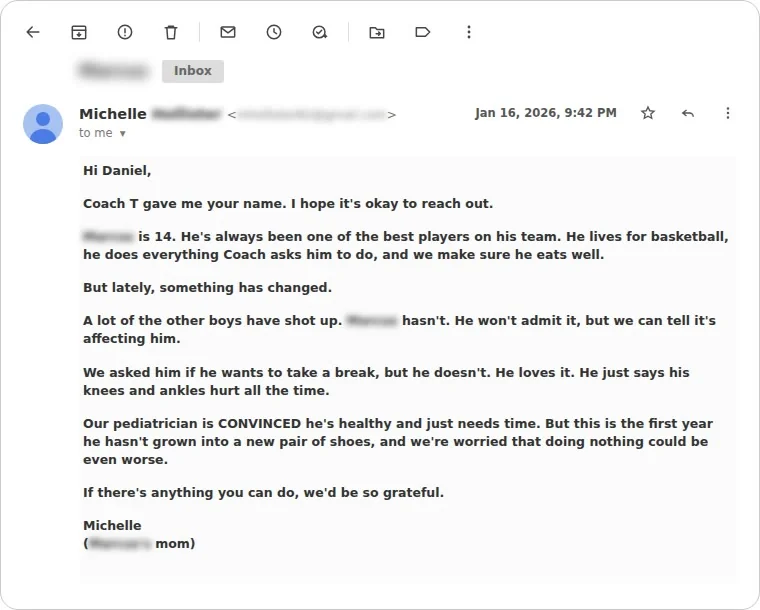
Her note raised a question Mercer says he kept hearing from other families: what if effort is not the missing piece?
- Another tub of protein powder
- Creatine
- BCAAs
- Mass gainers
Protein and other training products can support an athlete’s routine. But Mercer believed that adding more would not explain why Jayden was still tired and sore.
He began to focus on a different question: what signal might be changing how the body responds to stress?
The Signal Mercer Could Not Stop Thinking About: FGF‑21
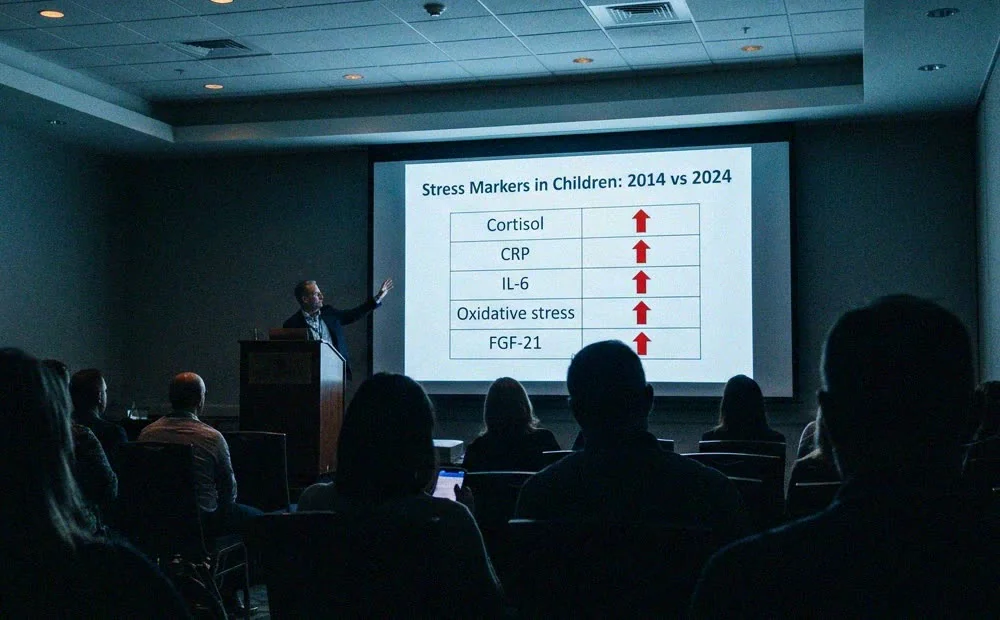
“A few years ago, I attended a sports science conference in Chicago,” Mercer said.
Between sessions, he joined a discussion about stress signals and environmental health. It was not a talk about basketball, or even athletic training.
But one term stayed with him: FGF‑21.
Researchers were still debating what raised the signal and what it meant in different settings. Mercer says he wanted to understand why it appeared in research about stress and metabolism.
Most people in the room moved on to other topics. Mercer took the name back to his hotel and started reading.
FGF‑21.
“I had heard the name before, but I had never asked what it could mean for an athlete under repeated training stress.”
That night, he began looking for an answer.
Why Mercer Thought FGF‑21 Mattered
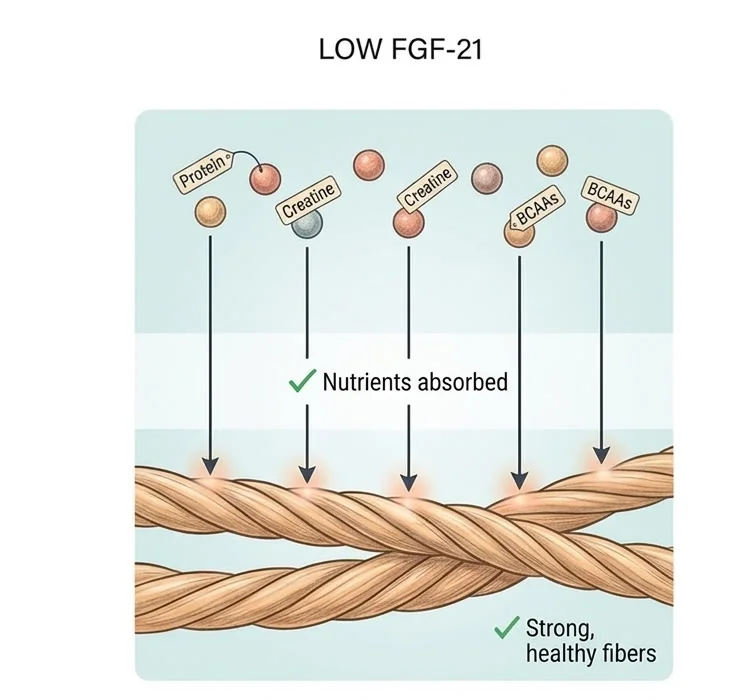
FGF‑21 is a signal linked to how the body responds to changes in energy use and stress. Mercer describes it as an “emergency brake.”
His concern was not that FGF‑21 alone explained every plateau. He wondered whether a body under repeated stress might direct more resources toward coping—and fewer toward recovery and development.

“I thought about the families who told me they could see a problem but could not name it,” Mercer said.
One mother had put it simply: “Something is off. I just cannot put my finger on it.”
“I was not looking for someone to blame. I was trying to find a better question to ask.”
Most parents focus on the things they can see: practice hours, meals, sleep, and soreness. Mercer says he began to look at the body’s response to all of that work.
It was not Jayden’s fault. And Mercer did not blame his parents. They had supported the basics. They were looking for an explanation they had not considered.
At 14, Jayden was 5′6″ and 128 pounds. Mercer says the numbers mattered less than the pattern: Jayden was training, but he was tired, sore, and not recovering as expected.
That was the question Mercer took into the next phase of Jayden’s program.
Why “Just Add More Protein” Was Not Mercer’s Answer
Jayden already had the usual advice: eat well, train with purpose, and allow time to recover. Mercer did not believe another scoop by itself would answer the question he was asking.
Protein has a role in an athlete’s diet. But it is one part of a larger routine. Mercer wanted to understand the signal he believed was affecting the body’s response to stress.
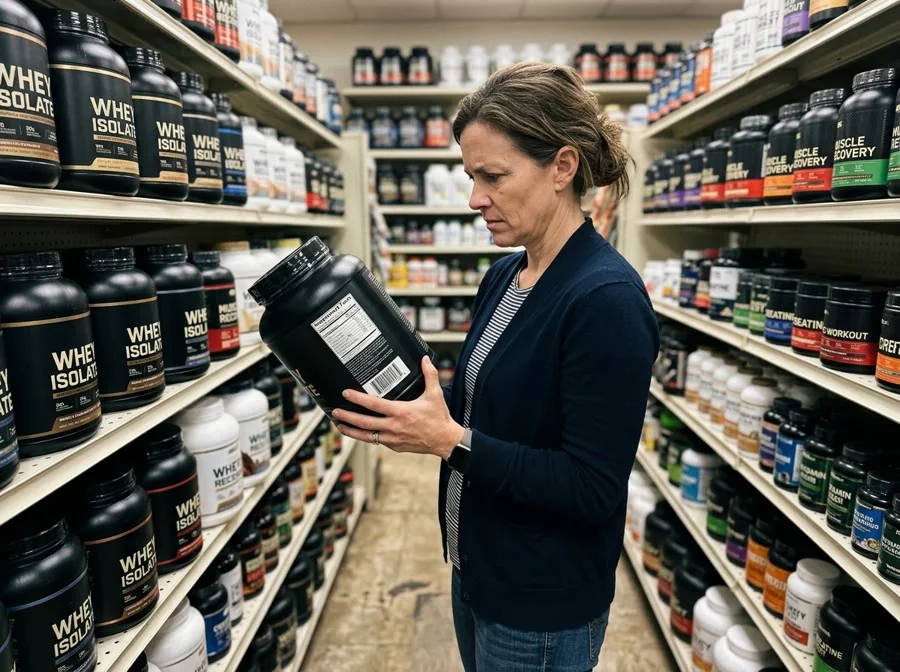
His question was not whether protein or creatine had value. It was whether those products addressed the specific problem he suspected in Jayden’s case.
That distinction led him to look at Makzyme, a compound he believed might affect the FGF‑21 signal.
He says that idea came from research on stress response—not from a promise that one ingredient could replace food, sleep, coaching, or medical care.
A Pattern Mercer Says He Had Seen Before
Jayden was not the first athlete Mercer says made him ask these questions.
He recalls other players who worked hard but felt stuck: a point guard who had not changed much over two seasons, a forward who struggled to add strength, and a wide receiver who had lost his place in the rotation.

“Different sports, different families,” Mercer said. “The thing I noticed was that effort alone did not explain why some of them were struggling to recover.”
He began tracking the basics more closely and looking for a routine that could fit into an athlete’s morning without replacing those fundamentals.
Jayden’s case became the first time Mercer says he put that theory to a full test.
What Changed in Jayden’s Routine
The first thing I do with any new athlete is measure everything. Height. Weight. Wingspan. Vertical. Sprint times.
Jayden was 5′6″ and 128 pounds. Mercer says he was talented, but tired and sore after practice.
They started with the basics: more consistent meals, a closer look at sleep, and changes to his training load.
After three weeks, Mercer says Jayden still felt worn down. His performance measures had not changed in the way they expected.

“That was when I decided to test the idea I had been studying,” Mercer said.
He added Makzyme to Jayden’s morning routine. Mercer describes it as a natural compound that may influence FGF‑21, a signal he had been following in research on stress response.
It took about ten seconds. It did not replace Jayden’s meals, sleep, or training plan.
Mercer says that over the next month, Jayden reported less soreness and began to make progress again. He also describes a rapid change in Jayden’s height, weight, and power—the claims that prompted people to ask what had changed.
That attention led to the review.
Which is when all of this mess started.
What the Review Found
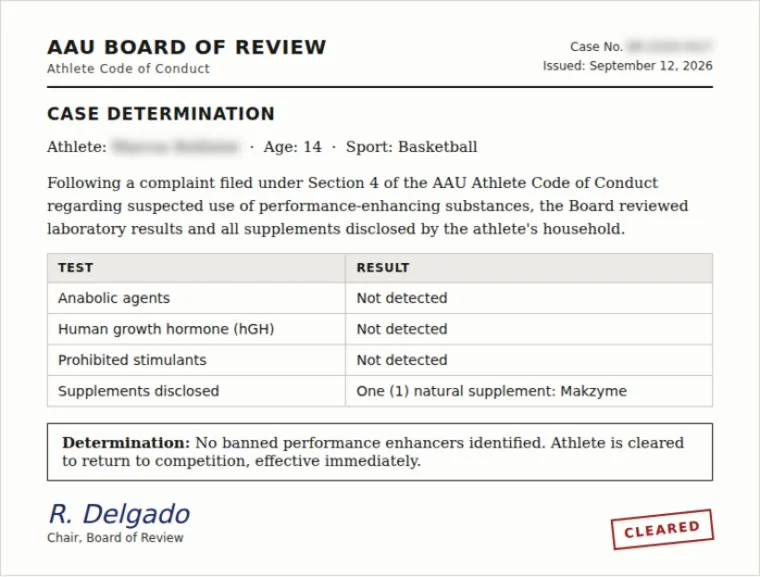
The review examined the products Jayden had used and checked for banned performance enhancers.
According to the case summary, the reviewers did not find steroids, HGH, or another banned enhancer.
The supplement Mercer had given Jayden was identified as Makzyme.
 Makzyme ingredient image
Mercer says Makzyme was the new part of Jayden’s routine. The next page explains the ingredient and the available formula.
Why Mercer Chose Makzyme



Makzyme caught Mercer’s attention because of research on how the body responds to stress. He says he saw a possible connection between that research and the pattern he had observed in athletes.
His theory was that supporting a healthy stress response could help make recovery easier. He describes Makzyme as a way to support that process—not as a hormone, a stimulant, or a replacement for a sound training plan.
That distinction mattered to Mercer. He wanted a routine that could sit beside the basics Jayden was already working on.
The Detail Mercer Says Took the Most Work
Choosing an ingredient was only the start. Mercer says he had to find a consistent source and decide how it would fit into an easy daily routine.
He began comparing ingredient forms, labels, and batch information. His concern was simple: if the form or amount changed from one product to another, it would be hard to know what an athlete was taking.

“I wanted to know what was in each batch and how much of the ingredient it contained,” he said. “A label is only useful if the product matches it.”
Mercer says that led him to set requirements for sourcing and testing before he would recommend a formula to families.
His conclusion: consistency mattered. He wanted a clearly labeled formula with a measured amount and quality checks for each batch.
That became the brief for the formula he wanted to make available.
The Formula Mercer Made Available
Mercer says he worked with a U.S. lab to turn those requirements into a daily formula. The goal was a clear ingredient label, a measured serving, and a routine that would be easy to follow.
Jayden was among the first athletes to use the finished formula, according to Mercer.
After the review ended, Mercer says parents began asking what Jayden had taken.
He decided to make the Makzyme formula available beyond his own training program.
"Our son had been stuck for over a year. Within two months his coach pulled us aside and asked what we'd changed. He's taller, he's stronger and he's not limping out of practice anymore."
"We'd spent a fortune on protein and creatine. Turns out he just wasn't absorbing it. This is the ONLY thing that made a difference."
"He takes it before school, every day. He's grown two inches since the fall and he's finally keeping up with his teammates. I wish we'd found this a year ago."
What Parents Should Know Before They Decide
Mercer’s story is about asking a new question when the usual answers do not explain what a family sees.
If you want to understand the ingredient he chose, the product page has the formula details and serving information.
SEE THE MAKZYME FORMULAThe Question Mercer Wants Parents to Ask
We asked Mercer what he would tell a parent who sees a similar pattern.
“Start with the basics. Ask about food, sleep, training load, and recovery. If your child is tired or in pain, speak with a qualified health professional.
And if those steps do not explain what you are seeing, keep asking questions. Do not assume a young athlete is lazy, or that the family has failed.
Jayden’s case made me look at one signal I had not paid enough attention to before. That changed the questions I asked.”
The Story Behind the Review
Jayden returned to the court after the review concluded. Mercer says he is still working with young athletes and continues to use the questions raised by Jayden’s case in his programs.
The unusual growth report drew attention to the product at the center of the review: Makzyme.
This article has followed the story behind Mercer’s decision. The product page gives the ingredient and formula details for readers who want to look more closely.
SEE THE MAKZYME FORMULA